
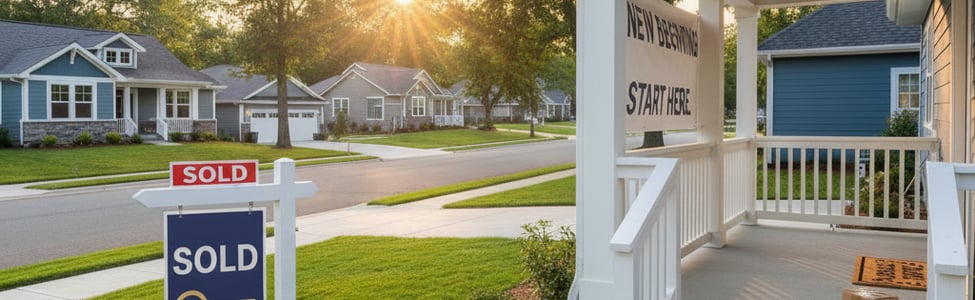
Buying your first home is one of the biggest milestones in life—but it can also feel overwhelming if you’re unsure where to start. Between mortgage approvals, down payments, closing costs, bidding strategies, and choosing the right neighborhood, it’s easy to get lost in the process.
This guide breaks everything down step-by-step so you understand exactly what to expect, how to prepare, and how to make smart financial decisions as a first-time home buyer in Canada. Whether you're planning to buy within the next few months or just researching your options, this is the guide that will help you feel confident and ready.
1. Determine Your Budget and What You Can Comfortably Afford
Before you fall in love with a home, you need to know what your budget actually looks like. This goes beyond just the purchase price—it includes your monthly mortgage payment, utilities, property taxes, maintenance, and closing costs.
Tips to determine your budget:
Look at your monthly income and expenses to determine how much you can comfortably spend.
Use a mortgage affordability calculator to estimate monthly payments.
Remember that lenders use your debt-to-income ratio to determine what you qualify for.
Factor in lifestyle choices (travel, savings goals, car payments).
Most first-time buyers are surprised to learn that lenders may approve them for more than they actually want to spend. The key is choosing a number that makes sense for you, not just what the bank approves.
2. Understand Your Down Payment Options
In Canada, your minimum down payment depends on the purchase price:
5% for homes up to $500,000
10% for the portion between $500,000 and $999,999
20% for homes $1,000,000+
If you put less than 20% down, you’ll need mortgage default insurance (CMHC), which is added to your mortgage.
First-Time Home Buyer advantages for down payments:
RRSP Home Buyers Plan (HBP): Withdraw up to $35,000 tax-free from your RRSP.
First Home Savings Account (FHSA): Tax-free contributions and withdrawals.
First-Time Home Buyer Incentive: A shared-equity program with the government (varies by region).
Understanding these programs can save you thousands and make your down payment more achievable.
3. Get Pre-Approved for a Mortgage Before House Hunting
This step is essential and will give you a huge advantage. A mortgage pre-approval tells sellers you’re serious—and gives you a clear budget.
Why pre-approvals matter:
You get a rate hold for 90–120 days.
You avoid falling in love with homes outside your budget.
You can move quickly when you find the right home.
Realtors and sellers take you more seriously, especially in competitive markets.
Make sure to compare multiple lenders and brokers—you want the best rate and terms, not just the fastest approval.
4. Choose the Right Realtor
A good realtor is a massive advantage, especially for first-time home buyers who need guidance through every step of the process.
A great realtor will:
Explain the entire buying process in simple terms
Help you understand market conditions
Protect your interests during negotiations
Recommend trusted mortgage brokers, lawyers, and home inspectors
Ensure you avoid costly mistakes
Help you buy the right home—not just any home
The right agent saves you money, time, and stress.
5. Start House Shopping: What to Look For
Once you’re pre-approved and ready, it’s time to start looking at properties.
Key things to consider:
Location: Schools, commute times, amenities, future development
Property type: Condo, townhouse, detached home
Age of home: Newer homes need less maintenance but may cost more
Monthly costs: Condo fees, utilities, heating type, property taxes
Neighborhood market trends: Are values rising or slowing?
Must-haves vs. nice-to-haves
Your realtor will help narrow down options and ensure you’re seeing homes that match your budget and lifestyle.
6. Making an Offer: How It Works
When you find the perfect home, the next step is making an offer. Your realtor will prepare the paperwork, review comparables, and help determine the right price.
Your offer may include conditions such as:
Mortgage financing
Home inspection
Status certificate review (for condos)
Sale of your current property
Your agent will walk you through the negotiation process and help you secure the best price and terms.
7. Home Inspection: Why It’s Important
A home inspection can save you thousands by uncovering hidden issues like:
Leaks
Electrical problems
Roofing issues
Foundation concerns
Plumbing problems
Even in competitive markets, a home inspection is an investment worth making.
8. Closing Costs You Should Expect
Many first-time buyers forget about closing costs. In Ontario, expect to budget:
Land Transfer Tax (and Toronto has its own municipal tax)
Legal fees
Title insurance
Home inspection
Appraisal fees
CMHC insurance (if applicable)
Plan for 1.5%–4% of the purchase price so there are no surprises.
9. Closing Day: What Happens?
This is when the home officially becomes yours. Your lawyer will:
Transfer the title
Send funds to the seller
Register your mortgage
Provide you with the keys
It’s one of the most exciting days of your life—and your realtor will guide you through the entire process.
10. Move In and Enjoy Your New Home!
After closing, it’s time to move in and start creating memories in your new space. Make sure to:
Set up utilities
Change your address
Update insurance policies
Review your warranties and manuals
Congratulations—you’re officially a homeowner!